
However‚ for the United States‚ the pretext or rationalization that is given for military action has changed over time‚ the ends have remained basically the same․
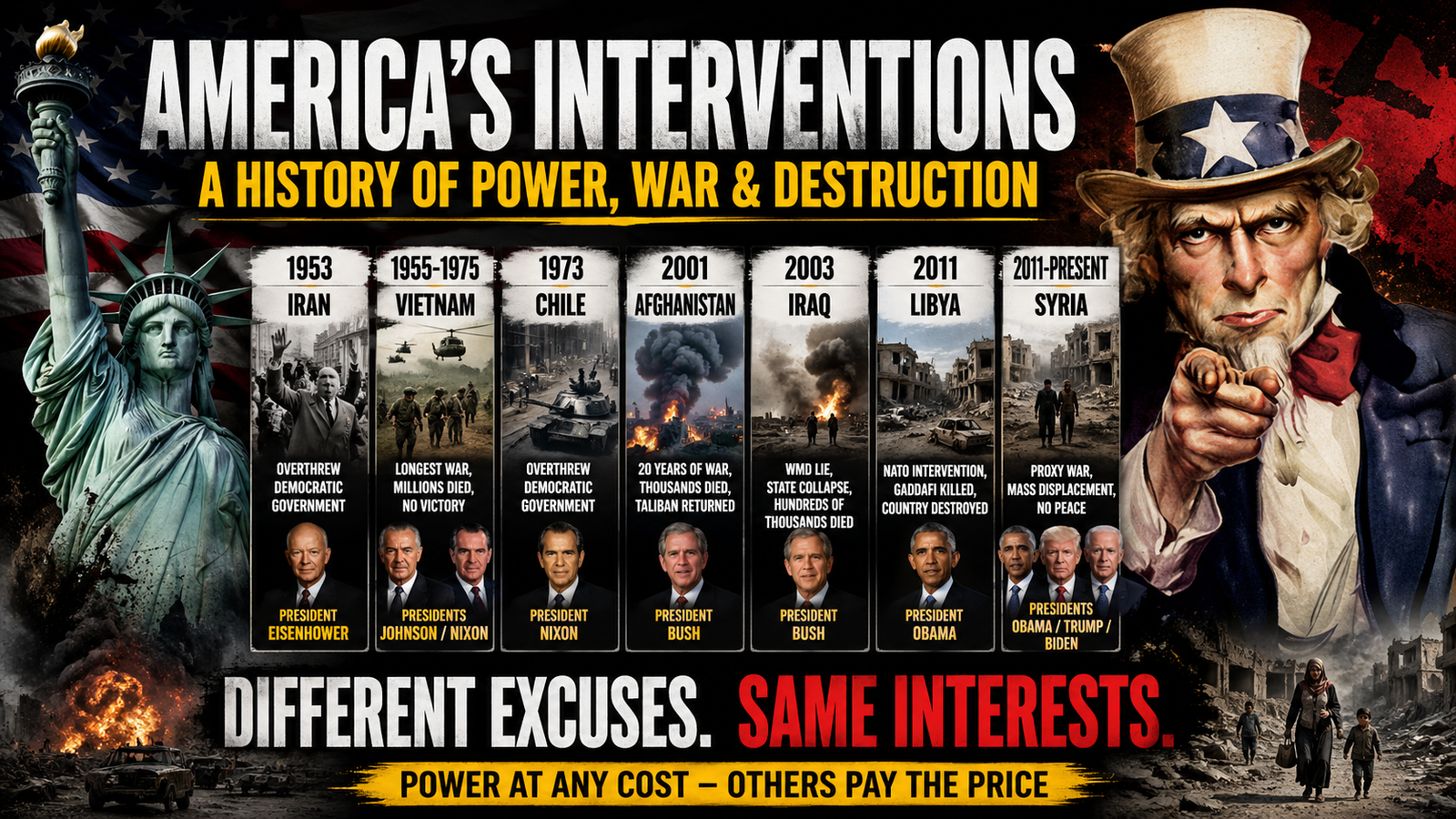
1953 ‚ Iran: The U․S․ and the U․K․ led a coup during the presidency of Dwight D․ Eisenhower to overthrow Iran’s democratically elected Prime Minister Mohammad Mossadegh․ The coup was undertaken to protect western oil interests in the country‚ ultimately deepening the political instability that would set the stage for the Iranian Revolution․
1955‚ 1975: Vietnam War (continued) The war was waged under US Presidents Lyndon B․ Johnson and Richard Nixon to prevent the spread of communism but the North Vietnamese were led by communist revolutionary Ho Chi Minh․ The war resulted in millions of deaths and the failure of U․S․ war objectives; the United States withdrew its forces․
1973, Chile: From Democracy to Dictatorship In Chile‚ the United States under President Richard Nixon helped the overthrow of democratically elected President Salvador Allende and the establishment of a military government that systematically violated human rights․
2001, Afghanistan: A Very Long War on Terror After September 11, 2001, President Bush started a military intervention against Afghanistan, which was ruled by Mullah Omar at the time. Twenty years of War and many deaths and lots of money spent didn’t stop the Taliban from reentering Afghanistan as rulers of that nation.
2003, Iraq: An Invasion of Controversy. Under George W. Bush, The Iraq War was initiated which resulted in the removal of Saddam Hussein from power. The reasons for the war was the presence of Weapons of Mass Destruction. The WMDs were never found. The aftermath of the war included death of thousands of Iraqis, destruction of all government institutions and continued instability.
2011, Libya: The State Shattered
The NATO alliance participated in the overthrow of Muammar Gaddafi during the Obama administration. The result of that was a country that continued to splinter and spiral into ongoing conflict.
2011 to Present, Syria: Complex Civil War
The US has participated in the multifaceted civil war in Syria both directly, and indirectly. As a result, the US helped to prolong the civil war in Syria, while simultaneously causing massive displacement of the Syrian people and an overwhelming humanitarian crisis.
2026, The year of Strategic Pressure Meets Resistance in Iran.
The level of conflict and aggressive behaviour towards Iran was at its highest since 1979. Although the strategic goals of US policies continued to be implemented against it, they did not yield the desired results. The resistance of both the political and military forces of Iran were showing that, from this intervention, operations will not always have an outcome that favors the United States.
Conclusion:
When viewed in their entirety, these historical events demonstrate recurrent behaviour from the US intervening militaristically or covertly in foreign nations for the purpose of advancing its own strategic interests. Many of these interventions have caused either significant damage to the political, economic or human existence of the affected nation. From historical perspective, it can be seen that the US has generally acted in line with national interests over the continued existence or expanded sovereignty of other nations.