
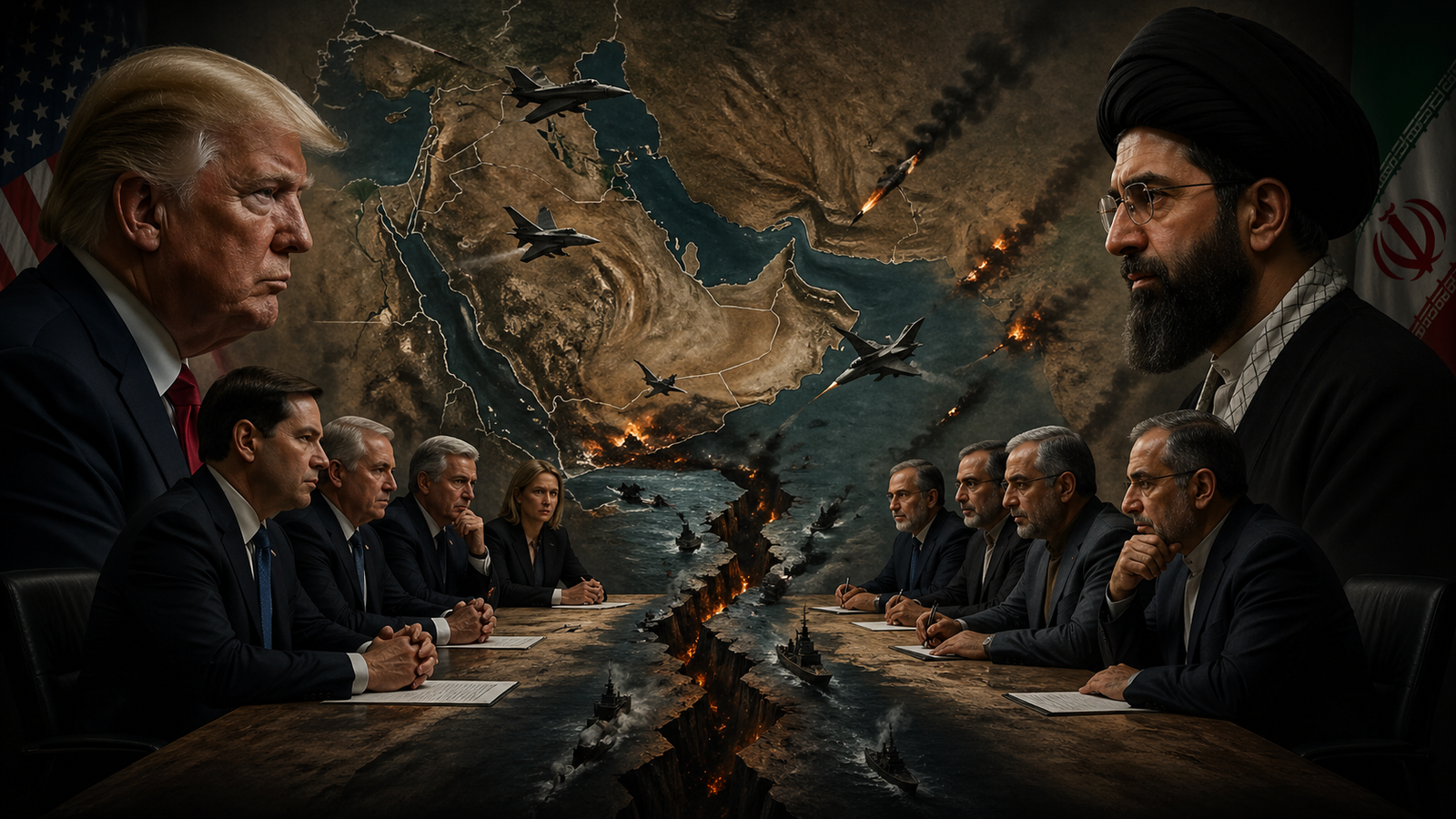
Among the major conflicts in international politics, some are not temporary divisive issues but rather deep strategic and ideological confrontations. The dynamics of simmering tensions and failed diplomacy between Iran and the United States is one such knot, with strands running through diplomacy, power, interests, and mutual distrust. Reports indicated that the second round would start within a few days or a week after the first phase of talks. The purpose was to build upon the preliminary discussions of the first phase and achieve practical progress, particularly on the nuclear program and sanctions. However, the second round of negotiations has yet to begin due to several key reasons:
- The U.S. Attempt to Turn Defeat into Victory:
The United States, which faced a clear setback on the battlefield, now seeks to convert that outcome into a diplomatic victory at the negotiation table something Iran is not willing to accept under any circumstances. The objectives pursued by the U.S., in coordination with Israel, included the transfer of Iran’s enriched uranium, regime change in Iran, curbing Iran’s rapidly advancing missile and drone technology, and completely eliminating Iran’s regional influence. Having failed to achieve these goals during the six-week conflict, the U.S. is now attempting to secure them through negotiations and pressure from mediators. However, Iran is not allowing this.
2. Differences in U.S. and Iranian Priorities:
The United States wants to prioritize Iran’s nuclear program in the negotiations and expects Iran to agree to transfer enriched uranium outside the country as a step forward. In contrast, Iran is not currently willing to engage on this issue. Instead, it insists that sanctions imposed on it must be lifted first, after which it will consider discussing other matters.
- Closure of the Strait of Hormuz and Blockade of Iranian Ports:
The United States demands that Iran reopen the Strait of Hormuz without any preconditions. Iran, however, maintains that the blockade of its ports must first be lifted before it considers reopening the strait. At the same time, Iran emphasizes that control over the Strait of Hormuz will ultimately remain in its hands. - Iran’s Commitment to Supporting Its Allies:
The United States wants Iran to pledge that it will stop supporting its regional allies, whereas Iran is not willing to do so under any circumstances, as it considers such support an essential component of its national security.
- Mistrust Toward the United States:
Iran believes that the United States has previously deceived it under the guise of negotiations, and therefore it no longer trusts Washington. While Iran has come to the negotiating table at the urging of mediators, it remains highly cautious, taking every step with the possibility of deception in mind.
Conclusion:
The suspension of negotiations between Iran and the United States is the result of multiple complex factors, including disagreements over the nuclear program, economic sanctions, regional politics, military pressure, and deep mutual mistrust. This issue cannot be resolved through diplomacy alone; rather, it requires a long-term, phased approach built on trust-building measures. Unless the United States demonstrates flexibility and seriousness, the deadlock is likely to persist.