
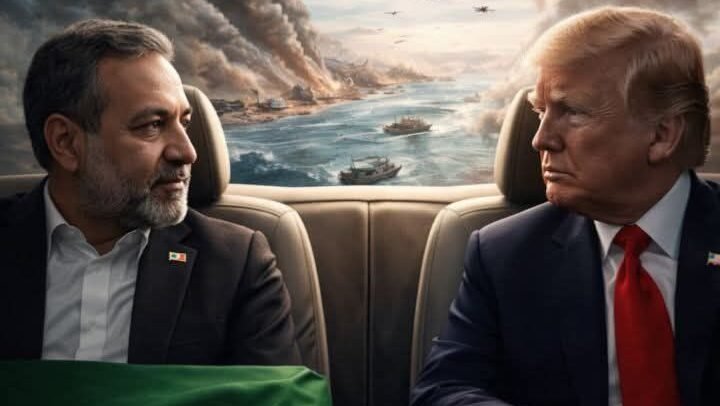
Many prominent journalists and war analysts around the world are saying that Iran had effectively won the war. During the conflict, it was in the “front seat,” but as soon as it accepted a two-week ceasefire, it moved to the “back seat,” and now Trump has taken over the front seat.
It is also being argued that continuing and prolonging the war was in Iran’s interest, and that if Iran had not accepted the ceasefire, it could not only have secured a historic victory but also forced the acceptance of all its demands.
However, if this issue is viewed not through emotions but in the light of strategic, diplomatic, and international principles, the picture appears quite different.
First of all , it is essential to understand the strategic dimension. Modern wars are not won solely on the battlefield; economies, resources, time, and endurance also play a crucial role.
Iran’s policy has always been based on “strategic patience,” in which long-term gains are prioritized over immediate victory. Prolonging the war may appear beneficial on the surface, but it increases pressure on resources, further weakens the economy, and leads to greater international isolation.
From a diplomatic perspective, accepting a ceasefire is not a sign of weakness but a calculated step. Through the ceasefire, Iran not only presented itself as a responsible state but also gained the sympathy of the international community. Had it continued the war, it is possible that a stronger global alliance would have formed against it, causing it to suffer on the diplomatic front.
According to international norms as well, ceasefires are preferred in any conflict so that the loss of human life can be minimized and the path for negotiations remains open. By accepting the ceasefire, Iran did not close this path; rather, it kept it open , allowing itself to remain in a position to secure its interests through negotiations.
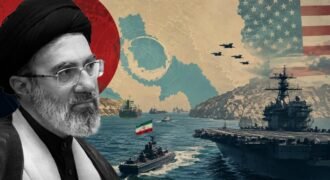
From a military standpoint, it is also important to understand that not every advance can be sustained . At times, a temporary withdrawal is actually part of a broader strategy, enabling a force to move forward a gain with better preparation. In this context, maintaining influence over a critical region such as the Strait of Hormuz itself constitutes a major strategic advantage, which may be more important than gains achieved in any single phase of the war.
Similarly, preserving Lebanese resistance forces and other allied elements in the region is also part of Iran’s long-term defensive strategy, which cannot be sacrificed for any short-term battlefield success.
In conclusion, it would be more accurate to say that Iran did not abandon the “front seat” for the “back seat,” but rather changed its position while keeping in view the vehicle’s speed, direction, and destination . What may appear to be a step backward on the surface is, in reality, part of a long- term strategy aimed at achieving lasting gains rather than momentary momentum.