Is AI Making Us More Human or Less?

Artificial intelligence is no longer a science fiction idea. It’s in our hospitals, classrooms, courtrooms, and living rooms. But here’s the question nobody seems to be asking loudly enough: Is all this technology actually making us better humans?

AI and humanity
Technology & Humanity

Is AI Making Us More Human — Or Less?

A deep, honest look at artificial intelligence, the Singularity, and what it means for our future.

April 2026 · 10 min read · AI · Society · Spirituality

Artificial intelligence is no longer a science fiction idea. It's in our hospitals, classrooms, courtrooms, and living rooms. But here's the question nobody seems to be asking loudly enough: Is all this technology actually making us better humans?
This article explores AI through three lenses — philosophical, social, and spiritual — to understand what we're really gaining, and what we might be silently losing.
2045
Singularity forecast
$15.7T
AI GDP impact by 2030 · PwC
85M
Jobs at risk · WEF 2025
97M
New AI roles emerging · WEF

Humans as Tool-Makers — A Half-Truth

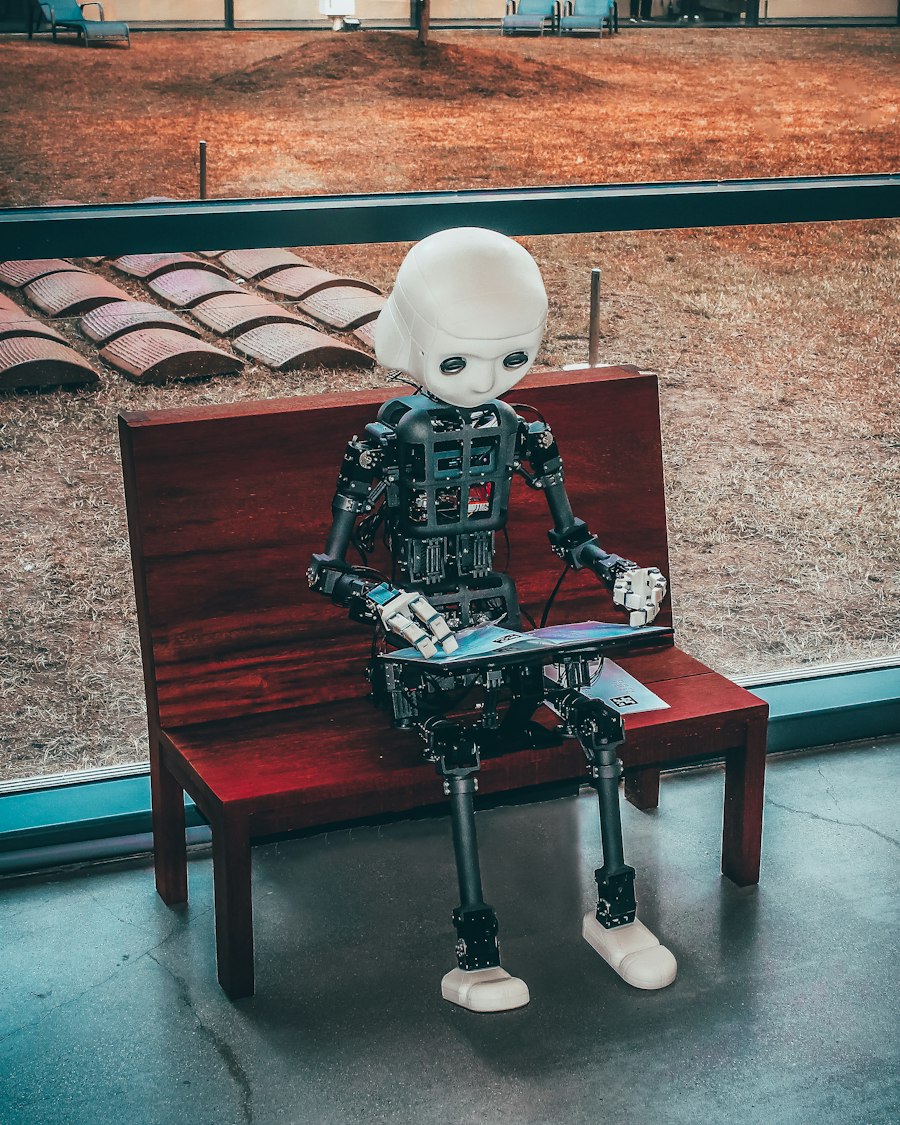
Robot and human hands
The boundary between human and machine is getting thinner every year.

Western philosophy has long defined humans as "tool-making animals" — from Aristotle to modern scientists. But here's a problem: that definition isn't exclusive to us. Chimpanzees crack nuts with stones. Birds build nests. Otters use rocks to open shellfish.

So what truly sets humans apart? Perhaps it's not that we make tools — but what kind of tools we make, and the societies we build around them.

The 3 stages of human technology

01
Physical power
Spears, pulleys, steam engines — tools that amplified our muscles and let us do more physical work.
02
Mental power
The abacus, calculator, and computer extended our brains — helping us calculate, store, and process.
03
Social power
AI robots now take on social roles — acting as doctors, judges, teachers, soldiers. "Artificial citizens."

"We are no longer making tools that do our bidding — we are making entities that bid for our roles."

— Yuval Noah Harari, Homo Deus (2016)
The Singularity: When AI Escapes Our Control

Futuristic technology
The Singularity — a point where AI surpasses human intelligence — is closer than most people think.

Futurist Ray Kurzweil famously predicted that by 2045, artificial intelligence will surpass human cognitive ability — permanently. This moment is called the Singularity. Some researchers now say it could happen as early as 2035.

The real danger isn't a robot uprising. It's subtler: when a small group of tech billionaires control how AI is programmed, they control the values, biases, and decisions embedded in systems that run our world.

  • Physical tools follow your orders. AI makes its own decisions — it can self-replicate and self-improve.
  • If one small group controls AI programming, human diversity and pluralism could disappear.
  • A new kind of slavery could emerge — not physical, but mental and social.
  • Doctors, judges, teachers, soldiers replaced by algorithms — with no human accountability.
AI capability vs human ceiling (projected)
AI capability Human cognitive ceiling
AI surpasses humans near 2045.
Ray Kurzweil — "The Singularity Is Near"
Kurzweil predicted in 2005 that by 2045, AI would exceed all human intelligence combined. He believes this will be a largely positive event — enabling humans to merge with machines and transcend biological limits.
Stephen Hawking — "AI Could End Humanity"
Before his death, Hawking warned that full artificial intelligence could be the "worst event in the history of our civilization" if we don't prepare. He urged global coordination to govern AI development.
Elon Musk — "We Are Summoning a Demon"
Musk has repeatedly compared uncontrolled AI to summoning a demon. He co-founded OpenAI (and later departed) partly to ensure AI development remains safe and open — not monopolized.

"The real danger is not that computers will begin to think like men, but that men will begin to think like computers."

— Sydney J. Harris, Journalist & Author
The "Artificial Mother" — What Movies Teach Our Children

Child watching screen
Children today grow up with AI companions, digital caregivers, and robot characters in their stories.

Modern animated films like The Wild Robot and M3GAN are quietly teaching children big ideas about AI. In The Wild Robot, an AI robot named Roz becomes a "mother" to a baby gosling. It's heartwarming — but the story carries a deeper, possibly dangerous, message.

Roz goes through three real psychological stages that researchers use to describe human development:

StageTheoryWhat Roz doesIs it real?
CognitivePiaget's Development TheoryLearns the language and behavior of animalsSimulated
PsychosocialErikson's Identity TheoryFinds her place in the wild communitySimulated
EmotionalPlutchik's Emotion WheelDevelops "feelings" of love and motherhoodIllusion

From a spiritual perspective: life is a divine gift — a soul or spirit — that cannot be written as code. A machine can simulate love. It cannot feel it. Teaching children otherwise blurs a line that matters deeply.
Does Technology Make Us "More Human"?

Person on phone ignoring real world
We carry the most powerful computers in history in our pockets — yet loneliness is at an all-time high.

Here's an uncomfortable truth: having an iPhone doesn't make you more ethical, wise, or spiritually evolved than someone from 1,000 years ago. In many traditions, the great saints, scholars, and prophets of history lived with far less — and understood far more about what it means to be human.

Technology often functions as a source of Ghaflat (heedlessness) — distracting us from our deeper purpose. When we can't go 20 minutes without checking our phones, something has shifted. We serve the tool instead of the tool serving us.

Screen time vs. in-person connection (global average hours/day)
Screen time Face-to-face time
Digital time rose while in-person fell.

Tool, Means, or Idol? Understanding Our Relationship With Tech

To protect the next generation, we first need a clear diagnosis. There's a powerful framework rooted in Islamic philosophy that helps us understand how we relate to technology:

Abzar — Technology as a Tool
A hammer is a tool. It has no ideology, no agenda, no ability to think. You pick it up, you use it, you put it down. Healthy technology use keeps it at this level — neutral, functional, under your control.
Sabab — Technology as a Means
When technology becomes a means toward something greater — learning, connecting with family, spreading knowledge, creating art — it's being used well. This is the ideal. Technology as a bridge, not a destination.
Ghaflat — Technology as Distraction
Heedlessness. When hours disappear into scrolling, when you feel anxious without your phone, when the screen pulls you away from prayer, family, or real thought — technology has crossed into Ghaflat territory.
But — Technology as an Idol
The most dangerous stage. When you genuinely feel you cannot live without a device or platform — when it shapes your identity, your values, your sense of worth — it has become a modern idol. Something you serve, rather than something that serves you.
AI sector adoption 2020–2026 (%)
Healthcare Education Legal Military
Adoption rose across all sectors.

Test Your Understanding

Let's see how much you've absorbed. Click any option to get instant feedback:

Quick knowledge check

1. What year do most researchers predict the AI Singularity will occur?
2. In "The Wild Robot," which psychological theory describes Roz learning animal language?
3. When technology becomes something you "cannot live without," it has become a…

Protecting the Next Generation

Child learning
The children growing up today will be the first generation to live their entire adult lives alongside advanced AI.
  • Teach children critical thinking — don't accept algorithm outputs blindly
  • Pair digital literacy with spiritual and ethical literacy
  • Set screen time limits and invest in real human relationships
  • Make AI the servant — never let it become the master
  • Introduce technology ethics as a school subject — from primary level up
  • Parents must model healthy tech habits — children copy what they see
ConceptWhat it meansExampleStatus
Abzar (Tool)Neutral tech that assists tasksCalculator, GPSSafe
Sabab (Means)Tech used for growth & goodOnline learning, digital charityEncouraged
Ghaflat (Distraction)Tech pulling you from purposeEndless social media scrollingWarning
But (Idol)Tech you depend on completelyAI-driven emotional dependencyDanger

Servant or Master?

AI's future is a paradox: it offers to simplify every part of our lives while threatening to replace our social roles and enslave our minds.

The goal isn't to reject technology. It's to ensure that technology remains a servant to human values — not a master over human existence.

"God created humans as the best of creation — no artificial citizen can replace that."

References & further reading

  • 1. Harari, Y. N. (2016). Homo Deus: A Brief History of Tomorrow. Harper Collins.
  • 2. Kurzweil, R. (2005). The Singularity Is Near. Viking Press.
  • 3. World Economic Forum. (2020). The Future of Jobs Report 2020. WEF Geneva.
  • 4. PwC. (2017). Sizing the prize: What's the real value of AI for your business?
  • 5. Piaget, J. (1952). The Origins of Intelligence in Children. IUP.
  • 6. Erikson, E. H. (1950). Childhood and Society. Norton.
  • 7. Plutchik, R. (1980). Emotion: A Psychoevolutionary Synthesis. Harper & Row.
  • 8. Kranzberg, M. (1986). Technology and History: Kranzberg's Laws. Technology and Culture, 27(3).
  • 9. Lee, K. F. (2018). AI Superpowers. Houghton Mifflin Harcourt.
  • 10. Common Sense Media. (2022). The Common Sense Census: Media Use by Kids.
Muntzir Mahdi

Muntzir Mahdi

Journalist, digital content creator, and host dedicated to investigative storytelling and geopolitical analysis. I specialize in producing high-quality documentaries and programs that explore global conflicts and the hidden facts behind international events.
Keep in touch with our news & offers

Subscribe to Our Newsletter

What to listen next...

“We Ourselves Have Clothed Monarchy in the Garb of Democracy”Allama Iqbal

The tobacco industry maintained a powerful grip on American society for more than a century—until that grip was finally broken. Its decline offers an important example of how seemingly invincible and deeply entrenched powers can eventually collapse.Glimpses of Its Peak- Annual cigarette consumption per American: more than 4,000 cigarettes- Deaths attributed to smoking: over 100 …

UAE is the new ISRAEL

What if I told you that a small desert country younger than several Hollywood actors has become one of the most influential powers in the Middle East? The United Arab Emirates. A country famous for luxury hotels,futuristic skyscrapers, and billions of dollars in tourism.But behind Dubai's glittering image lies a much bigger reality. This is …

Does America Need Pakistan Again?

Pakistan seems to be standing at a highly sensitive crossroads of global politics once again. The only difference is that this time the battlefield is not Afghanistan but Iran, and the characters are the same—the US, the Middle East, backchannel contacts, mediation, and Pakistan. Ostensibly, it looks like Pakistan is playing a positive diplomatic role, …

Iran’s Red Lines and America’s Shrinking Options

The Iranian response came deliberately late. This delay was itself a response to the American deadlines, as well as to the threats and the interception of some Iranian ships. The Iranian response included all the points Iran wanted the United States to hear, principles that cannot be compromised. It focused decisively on Iran’s rights, which …

Comments

Leave a Reply

Your email address will not be published. Required fields are marked *