


According to the Ministry of Human Rights, 17,771 cases of rape and gang rape against women were reported in Pakistan between 2021 and 2024. The number of cases that were never reported is believed to be much higher.
Five-year-old Ayat Noor from Haripur remained missing for fifteen days before her body was found in a well. The post-mortem confirmed that she had been sexually assaulted and died because of severe blood loss. Around the same time, the case of four-year-old Noor Fatima from Jalalpur Jattan came to light, where she was sexually assaulted and then killed. In Karachi, a 17- to 18-year-old suspect is being investigated in the rape and murder case of 18-month-old Aizal.
These are not just a few news stories. These are like the boils appearing on the body of our society, showing that there is a much deeper disease within it.
According to the Cruel Numbers 2025 report by Sahil, 3,630 reported cases of violence, kidnapping, missing children, sexual abuse and other related crimes against children were recorded in Pakistan during 2025. This means that, on average, more than nine children were affected every day. Among these were 522 rape cases, 596 cases of sodomy, and 58 cases in which children were murdered after sexual abuse. These figures are based only on cases reported in newspapers; the actual number may be different.
The question is: Are these crimes only the problem of a few brutal individuals?
Certainly, the criminal is first and foremost responsible for the crime. But when such incidents keep happening again and again in a society, when children are not safe even around the people around them, when the justice system remains weak despite complaints, and when criminals can find ways to escape the law, then we have to look beyond the individual and examine the whole system.
According to the State of Children 2025 report, the low conviction rate in crimes against children is also linked to weaknesses in investigations, collection of evidence, prosecution, and delays in the courts.
The media also has an important role here. The media should bring these crimes to the public’s attention, but it should not turn them into sensational stories, fear, or entertainment. Research on the coverage of such crimes by Pakistani media has also pointed out the use of sensational and dramatic reporting in sensitive cases.
But the issue is not only about how these crimes are reported in the news. The question is: What have we made normal in our society?
The increasing presence of physical display and sexual content in advertisements, dramas, films, and digital media certainly creates an environment that deserves serious discussion. A study conducted in Pakistan also examined the relationship between sexual content in television advertisements and the sexualization of children, and pointed out its possible negative effects.
However, one point needs to be kept in mind: a particular rape or sexual abuse case cannot be directly blamed on a single drama, film, or advertisement. But these things can still play an important role in such crimes. Crime is the result of many factors working together: a person’s mindset, upbringing, family environment, misuse of power, weak enforcement of the law, the belief that one can escape punishment, social values, and the media can all play a role.
And this problem is not limited to Pakistan. In the United States, the case of Jeffrey Epstein is a clear example of the bitter reality that even among influential people in society, minors can be sexually exploited. In 2019, U.S. federal prosecutors charged Epstein with sex trafficking of minors. The indictment described victims who were as young as 14 years old.
Therefore, this is not simply an issue of the East or the West. It is an issue of human morality, power, desire, law, and social responsibility.
In the West, the situation is even worse in some cases. For example, just this week, a woman killed her own three children by strangling them. There are also many cases in which a father repeatedly sexually abused his own minor daughter. There have even been claims and alleged evidence regarding the U.S. president that he sexually abused his own daughter.
That is why Islam has not only prescribed severe punishment for such crimes, but has also introduced an entire system. It has presented a complete moral and family system: lowering the gaze, modesty, family, marriage, responsibility, and legal boundaries. All these values and this complete system work together to build a healthy society.
Along with making sure that criminals receive the strictest possible punishment, we must also ask how we can create an environment where a child is safe, a woman is safe, a family is safe, and a criminal does not believe that he can escape because of power, money, connections, or weaknesses in the system.
Because when the body of an innocent girl is found every few days, it is not only the tragedy of one family.
It is a medical examination of the whole society.
And when the same disease keeps appearing in the report again and again, treating only the boil is not enough.
The whole body has to be treated.
Sign in to add a private note to this story.

Muntzir Mahdi
Journalist, digital content creator, and host dedicated to investigative storytelling and geopolitical analysis. I specialize in producing high-quality documentaries and programs that explore global conflicts and the hidden facts behind international events.
View all stories →Related Stories

Flydubai FZ1073: 6 Questions Raising Doubts About the Official Narrative
Flydubai FZ1073: 6 Questions Raising Doubts About the Official Narrative On September 30, 2026, flydubai flight FZ1073, travelling…
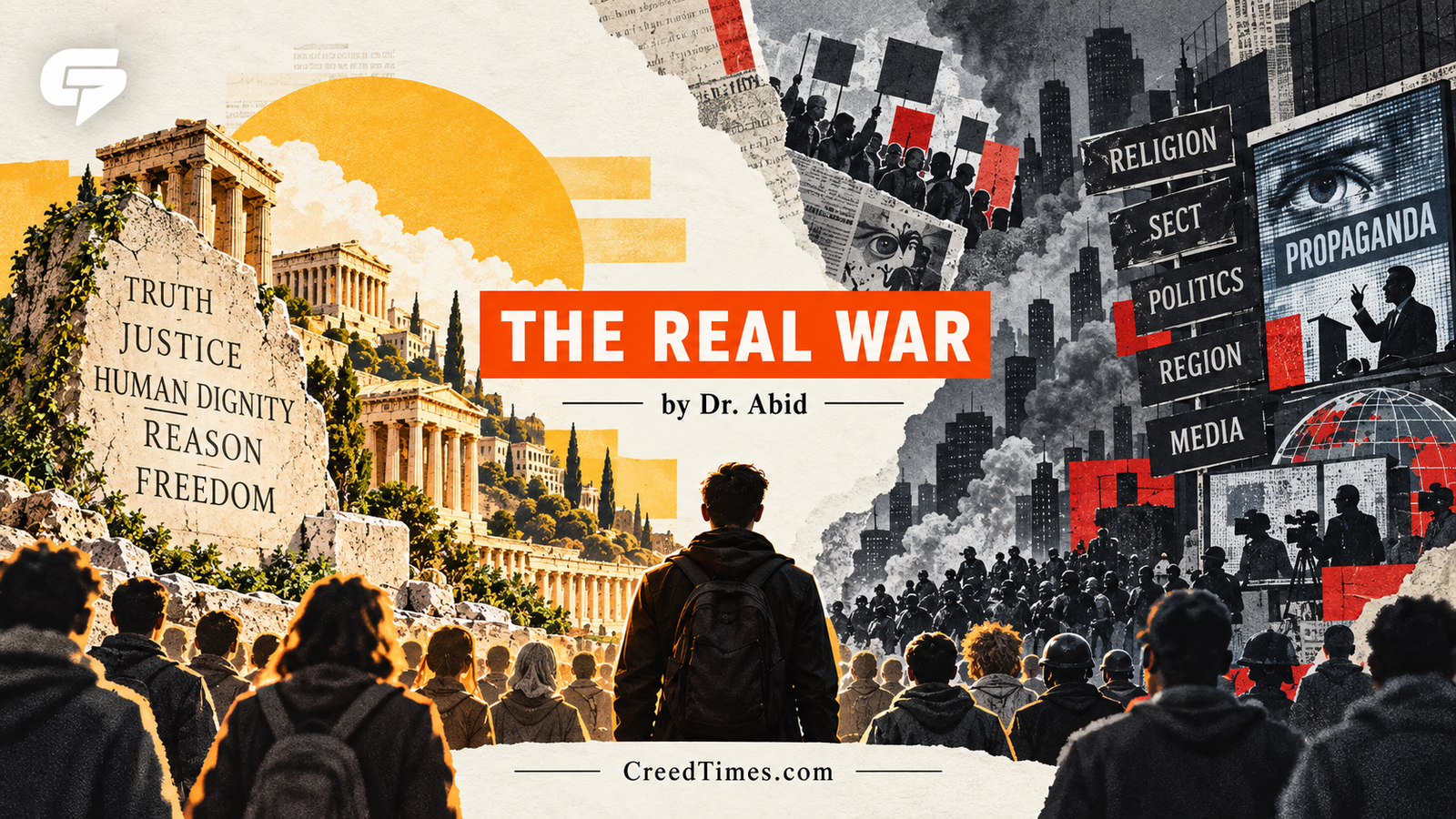
The Real War: Truth Against Falsehood
Today’s war is not a war of sects. It is not a Shia–Sunni war. It is not a…

You never thought that they would leave.
﴿مَا ظَنَنْتُمْ أَنْ يَخْرُجُوا﴾ This is part of the second verse of Surah Al-Hashr, in which Allah, the…